Large-board 2048 guide
2048 9x9: Is the Bigger Board Easier? Strategy, Rules, and 7x7 Comparison
A 2048 9x9 board gives you 81 spaces instead of 16 on the classic grid, so early mistakes are usually less punishing. The trade-off arrives later: more feeder lanes, more drifting tiles, and more decisions about which edge should stay organized. This guide explains the concept without pretending that every 9x9 implementation uses one official rule set.
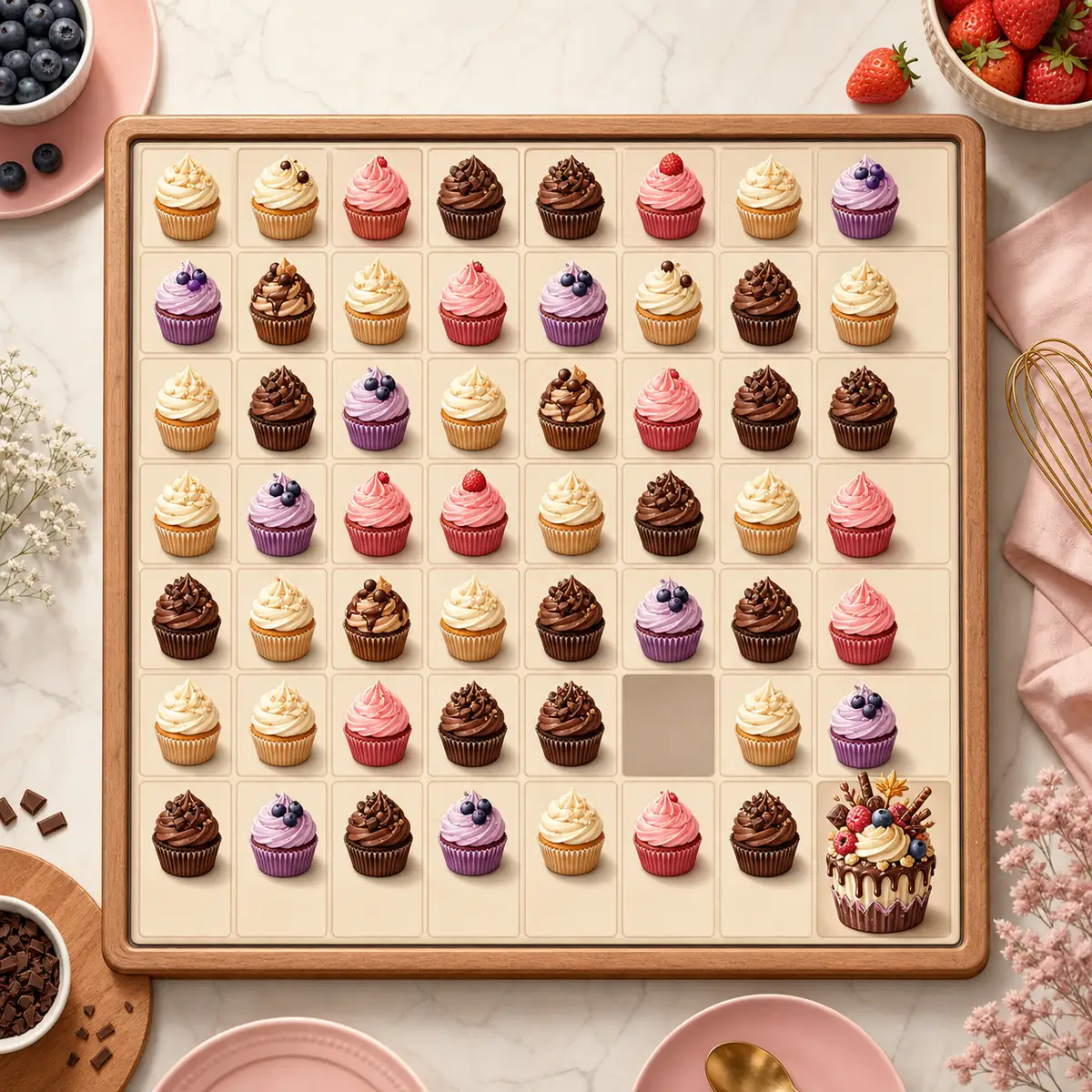
Quick answer: 2048 9x9 is more forgiving first, not automatically easier
The short answer is conditional. A 9x9 board has 81 cells, so a new player has more room to recover from a weak swipe than on a 4x4 board. That extra space can make the opening feel relaxed. It does not remove the central problem of 2048: every new tile changes future merge options, and a board that looks open can still become disorganized.
There is also no single universal 2048 9x9 rule set. Some versions may change the spawn values, undo limits, target tile, board shape, or scoring. Treat 9x9 as a board-size variant unless the page you are playing clearly documents the rest of its rules. Compare runs only with the same board size and settings.
- More cells make early recovery easier, but later positions contain more active lanes.
- The corner method remains a useful starting point, not a complete 9x9 solution.
- A 9x9 score should not be compared directly with a classic 4x4 or playable 7x7 score.
- Before playing, check the implementation's spawn rule, merge rule, undo behavior, and target.
2048 4x4 vs 7x7 vs 9x9
Use the comparison to understand the planning problem, not to declare one board universally best. A bigger grid changes the rhythm of a run as well as its survival time.
| Board | Space | Planning pattern | Best for | Main caution |
|---|---|---|---|---|
| Classic 4x4 | 16 cells and fast pressure | One anchor corner and a compact snake are easy to see | Learning standard rules and comparing personal records | One bad move can close the board quickly |
| 7x7 | 49 cells and longer recovery windows | Several feeder lanes can coexist around an edge | Experimenting with larger-board rhythm | A loose middle can hide a future dead end |
| 9x9 concept | 81 cells and very wide lanes | You need an anchor plus repeated board audits | Studying space management and long merge chains | Rules and spawn behavior vary by implementation |
| Rule-changing variant | Depends on blockers, shapes, or custom spawns | The classic corner habit may only partly transfer | Experienced players who want a new decision model | Do not assume standard scores or controls |
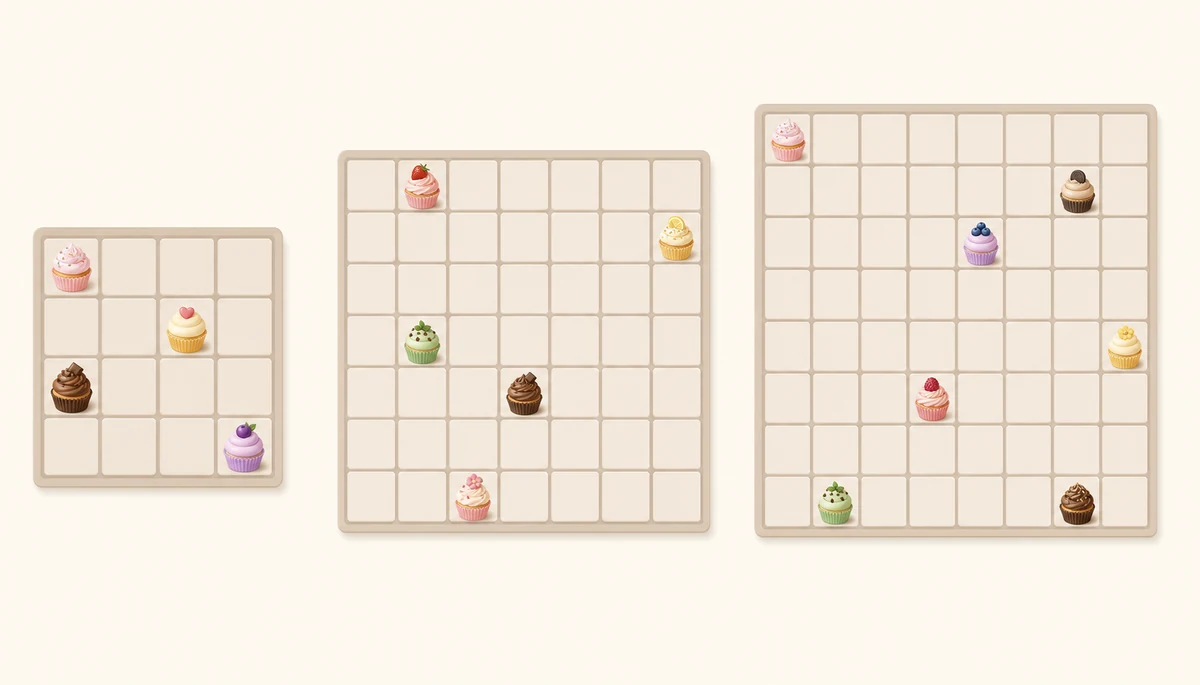
What a 2048 9x9 board actually changes
The obvious change is capacity: 9x9 contains 81 cells, while the classic game contains 16. The less obvious change is the number of possible lanes. On a small board, a high tile, a feeder row, and a dangerous empty space are easy to track together. On a large board, several low-value chains can develop at the same time, and a swipe that looks harmless can pull one chain away from the edge you planned to protect.
That means the early game and late game feel different. Early moves are usually more forgiving because there is spare room. Later moves are more demanding because you have more tiles to organize and more distances between useful pairs. A wide board can delay the moment when the game feels difficult without removing the need for disciplined ordering.
Do not read the number 9x9 as a promise of a standard product. It describes board dimensions, not one guaranteed game. A page may use normal doubling, a different spawn pattern, a custom target, limited undo, or a hybrid rule. Read the visible rules before treating a 9x9 run as comparable to another version.
More recovery space
A single weak move is less likely to fill every useful lane immediately.
More organizational work
The same extra space can let small tiles drift until they are difficult to feed into the main chain.
Why 9x9 is not simply an easier 7x7
It is tempting to rank boards only by empty cells: 4x4 is hard, 7x7 is easier, and 9x9 must be easiest. That model describes the opening but not the full run. A board with more cells gives you more legal moves, yet it also gives new tiles more places to spread. If your largest tile stays safe while the smaller tiles become fragmented, the extra space can postpone the warning rather than solve it.
The most useful comparison is the same rule set at different sizes. Keep the merge rule, spawn behavior, undo allowance, and target consistent, then compare how many lanes you can maintain and how often you need to consolidate. A 7x7 page on this site is a playable reference for larger-board rhythm; this 9x9 guide is the narrower explanation of what happens when that idea is expanded again.
Scores are especially easy to misread. A 9x9 run can survive longer simply because it has more cells. That does not make a 9x9 score a stronger performance than a 4x4 score. Record the board size and special settings with any personal best so your own comparisons stay honest.
Compare like with like
Use the same dimensions, spawn rule, target, undo policy, and scoring behavior when comparing records.
Track decisions, not only score
Note whether your anchor stayed safe, whether feeder lanes were available, and when the center became crowded.
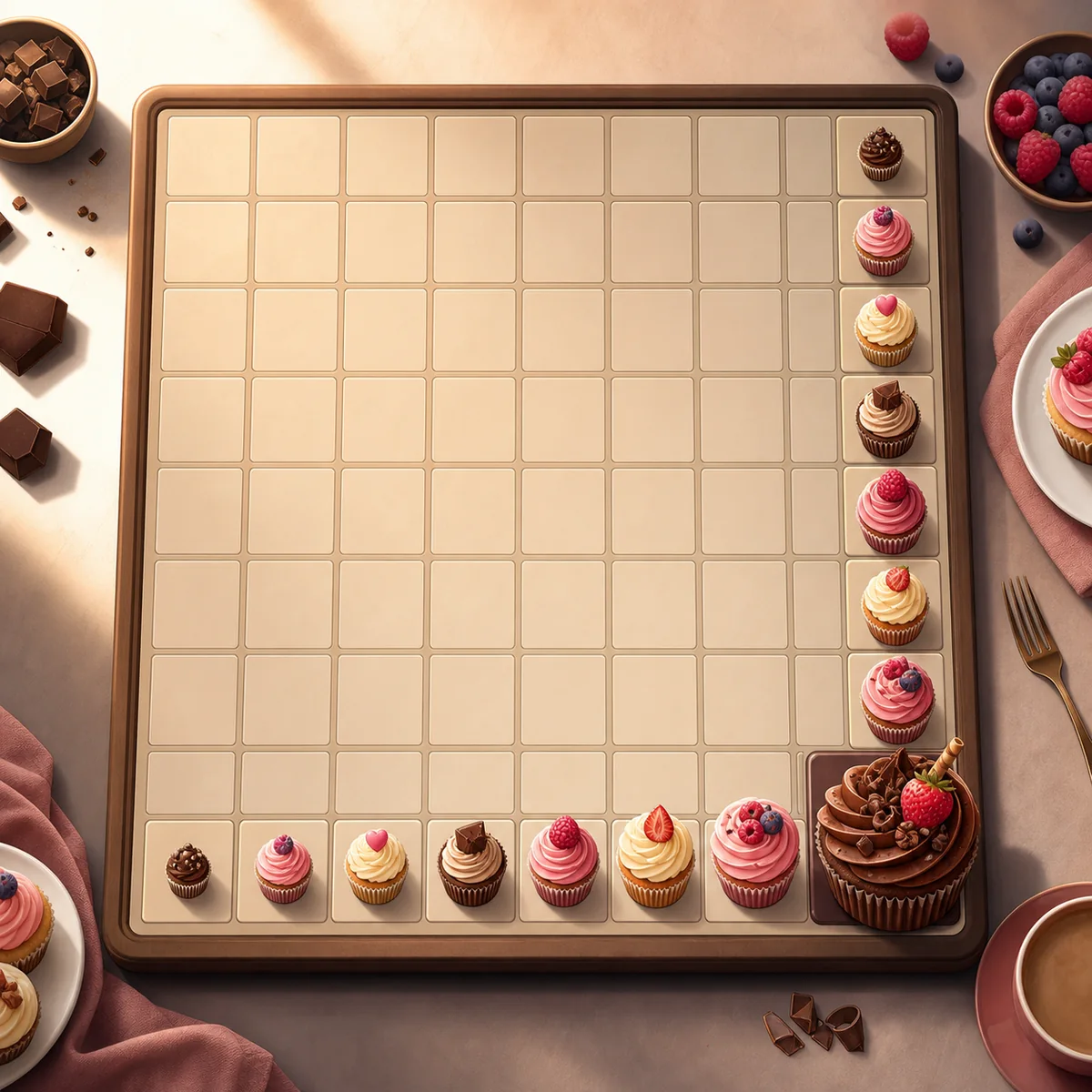
How to adapt the corner method on a large board
A fixed corner is still a useful anchor because it gives the largest tile a predictable home. The difference is that a 9x9 board gives you more lanes feeding that corner. Start by choosing the edge and corner you want to protect. Then keep the largest tile there while building smaller values along the same edge instead of allowing every new pair to occupy the center.
Use a snake-like order, but do not treat it as a command to repeat the same two moves forever. After a few turns, inspect the board: where is the next merge, which row is blocked, which low tile is isolated, and what new spawn would make the next move dangerous? On a wide board, a short audit is often more valuable than an automatic swipe.
When the board becomes crowded, consolidate before chasing a distant pair. A clean edge with fewer active lanes is usually easier to protect than a scattered collection of attractive merges. If the implementation offers undo, reserve it for a genuine input mistake or a test move; unlimited undo changes the meaning of a score and should be disclosed when you compare results.
Anchor the largest tile
Choose one corner and avoid moves that pull the anchor into the open center.
Build feeder lanes
Line up smaller values along the protected edge so future merges have a clear destination.
Audit before sweeping
Check the next pair, the blocked row, and the safest empty lane before using a familiar move sequence.
What to check before you play a 2048 9x9 version
First check the board itself. The page should state that it is 9x9 and show a grid that matches the claim. Next check the merge rule: standard 2048 combines equal values, but a themed or experimental version may change the progression. Confirm what appears after a valid move and whether the new tile can spawn in every empty cell or under a custom restriction.
Then check controls and recovery. Keyboard arrows, swipe input, restart, fullscreen, and undo should be labeled clearly if they exist. A wide board can be hard to use on a small screen, so responsive layout and a visible status message matter. If the page embeds a game from another source, it should explain what to do when the frame does not load instead of hiding the limitation.
Finally check how results are stored. Local best scores are useful for personal practice, but they are not a public world record. If the page makes claims about being official, safest, fastest, or a record, look for a named creator, a documented rule set, and a source that can be verified. A clear variant can be fun without making claims it cannot prove.
Rules
Board size, merge behavior, spawn behavior, target tile, and special powers are stated near the game.
Controls
Arrow keys or swipes respond, restart is visible, and any undo or fullscreen behavior is explained.
Comparability
Scores identify the board size and settings instead of mixing classic, assisted, and custom runs.
A beginner checklist for large-board 2048
If you are new to larger boards, do not begin by chasing the highest visible tile. Begin by learning the movement rhythm. Keep the main tile on one edge, leave at least one feeder lane available, and use the extra cells to prepare merges rather than filling every open space. The goal is to understand why a move keeps the board flexible.
Use the classic Cupcakes 2048 board to learn the basic merge loop and tile order, then try the playable 7x7 page to feel how more space changes planning. Once you understand those differences, a 9x9 implementation is easier to evaluate: you can separate the effect of board size from the effect of unfamiliar controls or custom rules.
The most reliable habit is a pause before each irreversible move. Ask where the largest tile will be after the swipe, which new tile could appear, and whether the next merge still has a route. On an 81-cell board, that pause is not about playing slowly; it is how you prevent the extra space from turning into extra disorder.
Start with a stable edge
Keep the largest tile and the next few values organized along one side before exploring the center.
Leave a route for new tiles
Open space is useful only when a future spawn can still move toward a planned merge.
Write down the settings
For a fair record, save the board size, target, spawn rule, and whether undo or assistance was enabled.
Read these Cupcakes 2048 guides next
2048 9x9 questions
Reference used for the classic 2048 background
The 9x9 discussion is intentionally cautious because board-size variants can change their rules. This source is included for the original open-source project's classic game context, not as proof that every 9x9 implementation is official.
- Gabriele Cirulli's 2048 open-source project — Original project repository and classic 2048 background; individual 9x9 variants should be checked separately.