High Score Guide
2048 Cupcakes High Score: What Is Good, What Is Possible, and How to Improve
A good 2048 Cupcakes high score is more than the number beside the board. It reflects how long you protect space, keep a corner chain alive, and continue after the Rainbow Cupcake. This guide explains score ranges, record claims, post-2048 goals, and practice for players chasing 4096, 8192, and cleaner boards without unsafe hacks.
Quick Answer: What Counts as a Good 2048 Cupcakes High Score?
For casual players, reaching the Rainbow Cupcake at 2048 is already a strong result. If you can do it with several empty cells left, your board is healthier than a rushed win with no room to continue.
A higher score usually comes from continuing after 2048, building another 2048 tile, and eventually merging toward 4096 or 8192. Because Cupcakes 2048 follows the 2048 merge rules, score growth depends on repeated safe merges, not on one lucky move.
Treat public record claims as context, not a promise. Different clones, undo rules, board sizes, power-ups, and modified versions can change what a score means. For this site, the clean benchmark is browser play with normal 4x4 rules and no score editor.
This Guide Covers
- Good score ranges
- 2048 vs 4096 goals
- Record claim checks
- Post-win board control
- Practice routine
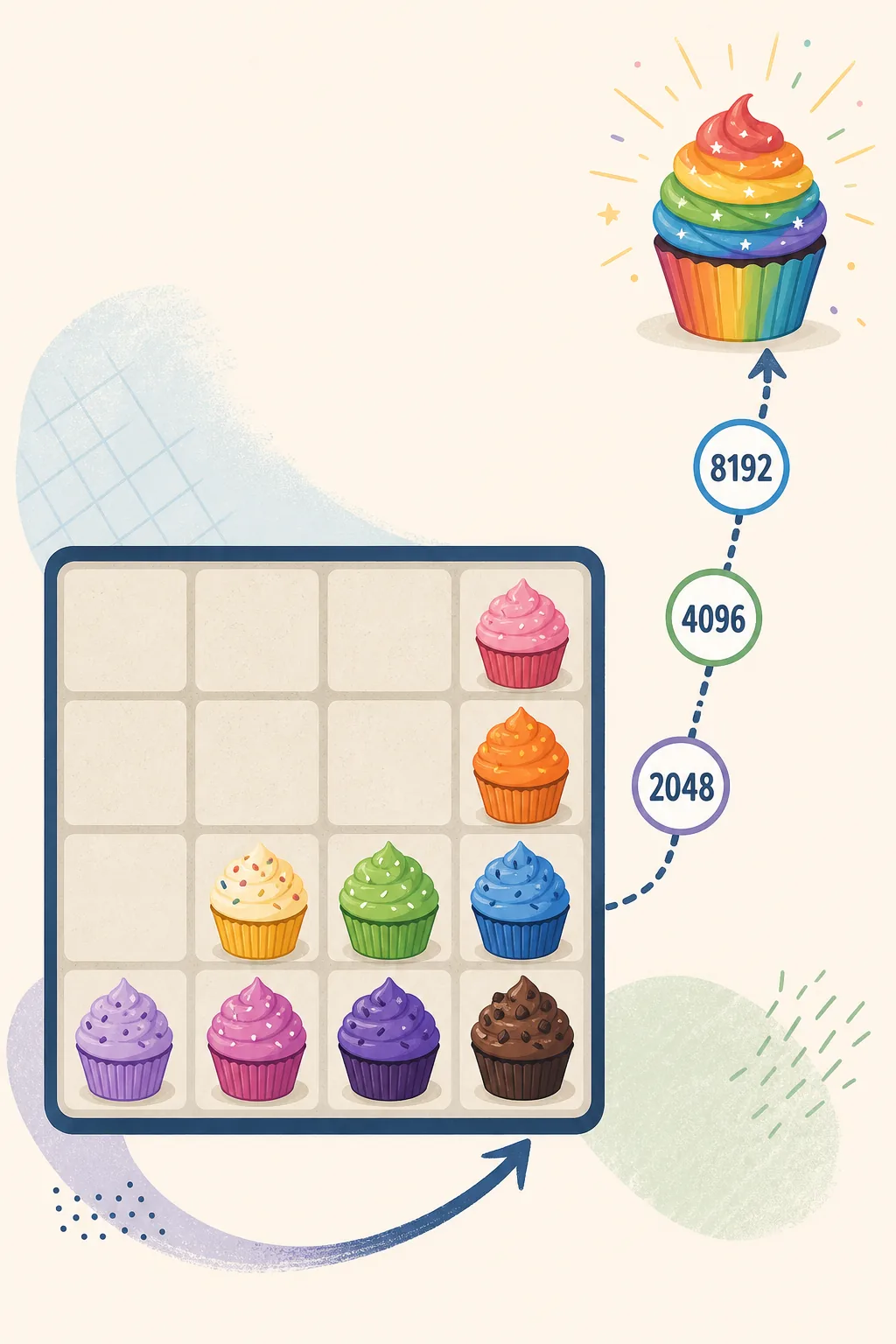
2048 Cupcakes Score Ranges and Milestones
Exact score values vary by the merges you make before and after the Rainbow Cupcake, so use score bands as practical targets rather than rigid grades.
| Score Band | Tile Goal | What It Usually Means |
|---|---|---|
| First win | 2048 Rainbow Cupcake | You understand the core merge path and can keep the board alive long enough to finish the main goal. |
| Clean win | 2048 plus open space | You reached the goal without collapsing the board, so continuing is realistic. |
| Advanced run | 4096 direction | You can build a second high tile while protecting the first one and preserving a value ladder. |
| Long run | 8192 direction | You are managing repeated late-game cycles, where one broken row can cost hundreds of moves. |
Use the all-cupcakes tile guide to identify each milestone visually; the dessert artwork changes, but the doubling logic stays the same.
How to Compare a 2048 High Score Fairly
Queries such as 2048 high score and world record can refer to different boards. Compare scores only when board, spawn, undo, and script rules match.
A useful 2048 high score benchmark
A Rainbow Cupcake win is a real milestone. A stronger run reaches 2048 with open cells and continues toward 4096 without an editor or modified board.
Highest 2048 score is not always a world record
A screenshot may show a high number without board size or rules. Treat public records as context until conditions are documented.
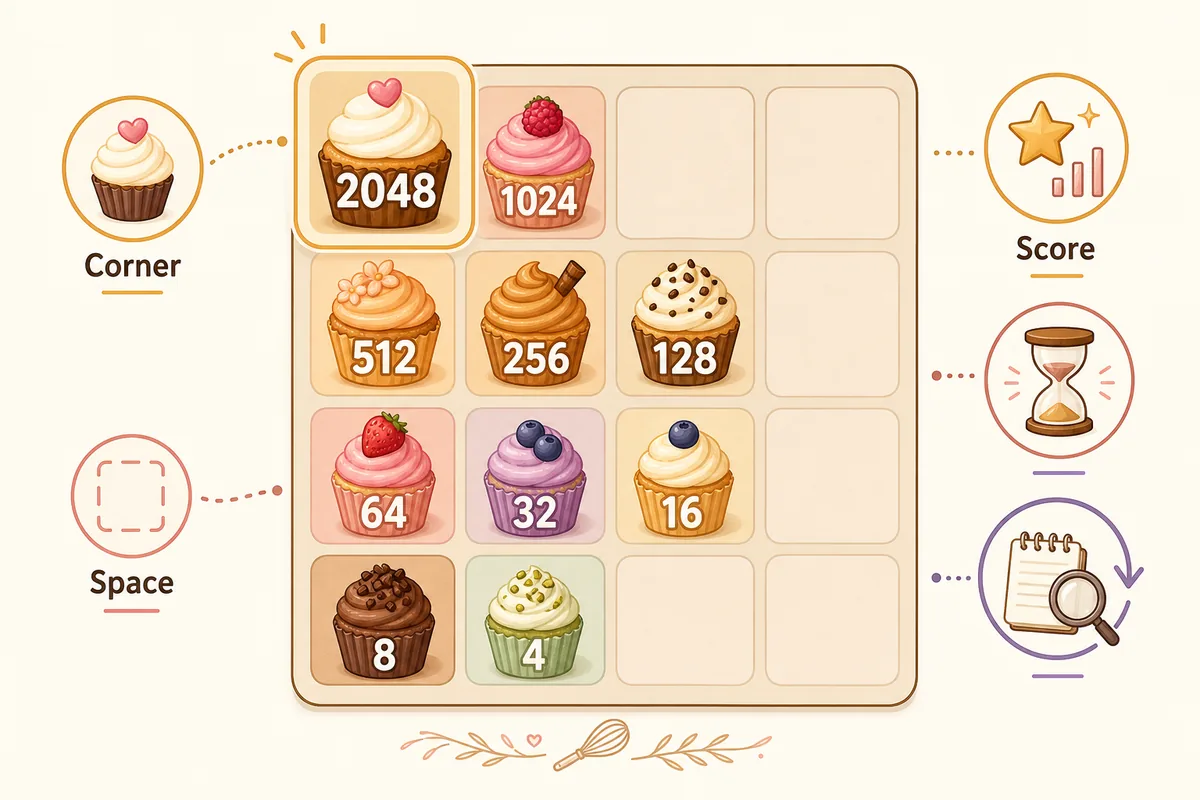
How to Read a 2048 Cupcakes High Score
A score is easier to compare when you record the board conditions as well as the final number. Use this short review to turn one high score into a repeatable practice target.
Comparison
Record the board conditions
Record the 4x4 board, largest tile, empty cells, and whether undo or assistance was used. A score without rules is only a rough benchmark.
Review
Find the first loss of space
After a failed run, find the first move that reduced safe lanes. One clear decision can guide the next practice round.
Next goal
Set a repeatable 4096 target
After 2048, keep the corner anchor and a few empty cells instead of chasing a record. A controlled 4096 attempt is more useful than an unexplained number.
Fairness
Separate score from record claims
Classic 2048, Cupcakes 2048, larger boards, modified spawns, and solver-assisted runs are different benchmarks. Label the version before comparing screenshots.
How Score Works in Cupcakes 2048
In most 2048-style games, score increases when two equal tiles merge. Cupcakes 2048 keeps that same idea: small cupcake merges build the foundation, mid-value merges create the path to 512 and 1024, and late merges create the biggest score jumps.
This means a high score is a record of many good decisions. Two players can both reach 2048, but the player with cleaner space and better late merges can continue much farther. Do not judge a board only by the score at the moment you win.
The useful question is not simply “what is my score?” but “can this board still create the next matching high tile?” If the answer is yes, your score run is alive.
Score follows merges
Every useful merge both raises the score and changes the board shape.
Space is part of score
Open cells keep the run alive long enough for future high-value merges.
Late tiles matter most
A protected 1024 or 2048 gives more future value than scattered mid tiles.
Board health beats speed
Fast swiping can add points quickly while destroying the shape needed for a record run.
What About 2048 World Record and Highest Score Claims?
Classic 2048 records, solver runs, modified boards, unlimited undo, and casual screenshots are not automatically comparable. Judge a normal 4x4 Cupcakes 2048 run separately from assisted or edited play.
Check board size, spawns, undo, scripts, and the full board before accepting a record claim. For practice, use clear milestones: Rainbow Cupcake, clean 2048 with four empty cells, then a post-win 4096 attempt.
Compare same rules
Use 4x4, normal spawns, no score editor, and no hidden automation as the baseline.
Beware edited scores
A score alone is weaker evidence than a full board state and rule explanation.
Separate variants
Classic 2048, Cupcakes 2048, and powered variants should not share one scoreboard.
How to Push Past the Rainbow Cupcake
After you make the 2048 Rainbow Cupcake, resist the urge to loosen the board. The safest high-score plan is to keep that large tile anchored and build a second high tile beside it. The run only improves if the next 1024 and 2048 can still reach the anchor.
Use the same corner method from the strategy guide, but become more conservative. Every swipe should protect the highest cupcake, keep a descending row or column, and leave room for new low cupcakes to merge upward.
A common failure after 2048 is celebrating too early. If the Rainbow Cupcake drifts into the center, it blocks movement and forces smaller tiles around it. Keep the highest tile on an edge and rebuild space before chasing another big merge.
High-Score Practice Routine
Practice in short focused rounds. In round one, aim only to reach 512 with your highest four cupcakes on one edge. In round two, aim for 1024 with at least three empty cells. In round three, attempt the Rainbow Cupcake and stop to review the board before continuing.
Write down the move that broke your best boards. Was it an upward swipe that lifted the anchor? A middle merge that trapped a 256? A panic move with only one empty cell? The pattern tells you what to train next.
Use the live board below for practice, then keep the strategy and all-cupcakes guides open in nearby tabs when you want to review value order or recovery moves.
512 checkpoint
Your highest tile should already be in the chosen corner.
1024 checkpoint
The next largest tiles should touch the same edge in descending order.
2048 checkpoint
Win with enough space to continue, not with a full board.
Review checkpoint
After every loss, identify the exact move that broke the chain.
Mistakes That Keep Scores Low
The biggest score killer is scattering high-value cupcakes. A 512 in one corner and a 256 on the opposite side may look strong, but those tiles cannot help each other. Bring large cupcakes onto one edge as early as possible.
Another mistake is chasing every visible merge. A small merge is useful only if it protects the anchor, creates space, or feeds the chain. If it opens a hole next to your highest cupcake, it may cost more than it gives.
Finally, avoid fake high-score shortcuts. Score editors, unknown scripts, and hacked versions make screenshots less meaningful and can introduce browser risk. Real improvement comes from repeatable board control.
Practice a High-Score Run
Use the embedded game as a live practice board. Start with a clean corner, protect open space, and stop after each milestone to check whether the board can still continue.
The live board is the game; the images are editorial illustrations, not official screenshots.