Game meaning explained
2048 Cupcakes Meaning: What the Game Represents
The short answer is simple: 2048 Cupcakes is a cupcake-themed version of the classic 2048 puzzle. “2048” describes the doubling ladder and the target value, while “Cupcakes” describes the visual tile set. The name does not refer to a cupcake recipe, a bakery ordering service, or a separate mathematical system. This guide separates the game rules, the dessert imagery, the Rainbow Cupcake, and the source history so the common search variants are easier to understand.
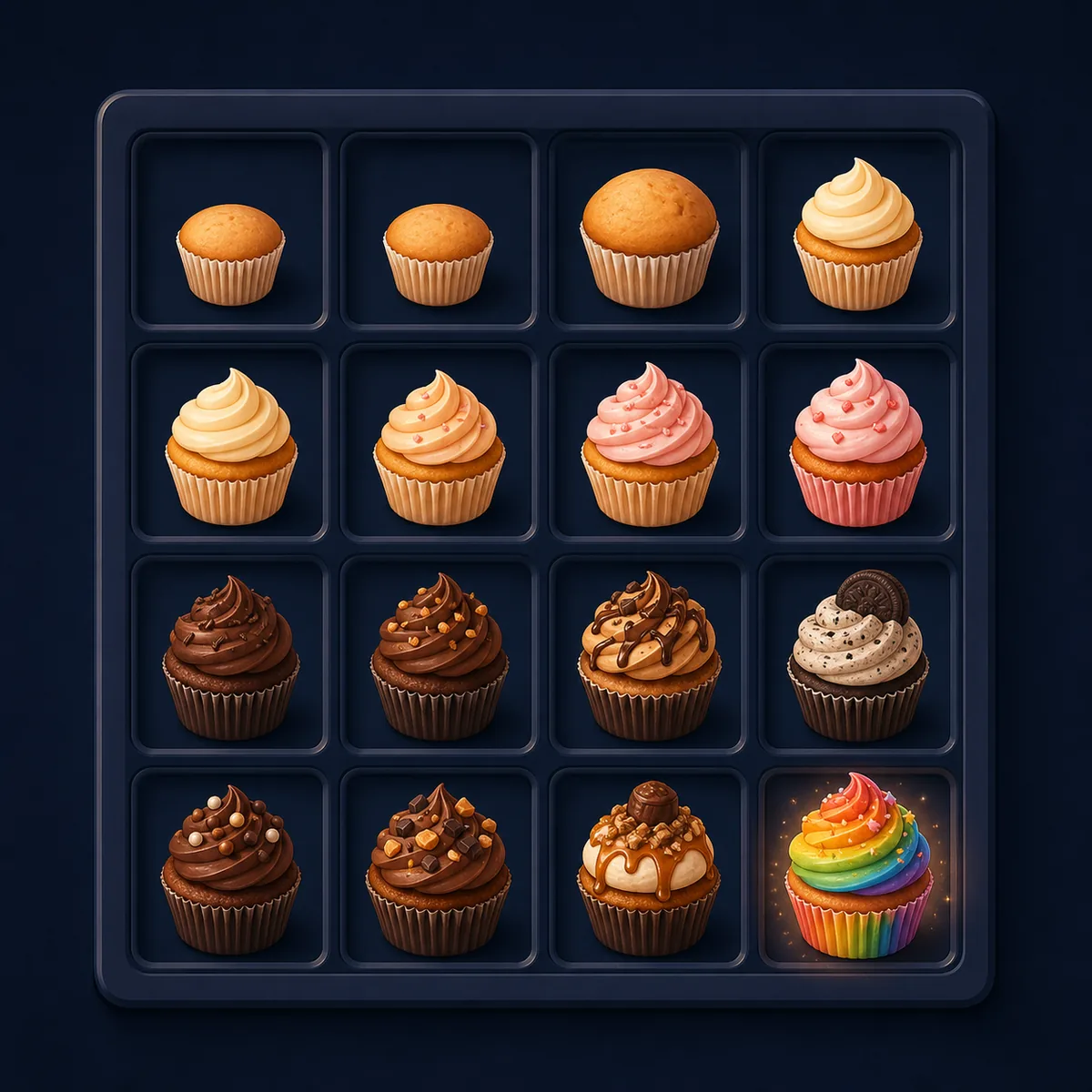
Quick answer: what 2048 Cupcakes means
2048 Cupcakes means “the 2048 merge puzzle with cupcakes as its tile language.” The board still uses the familiar rule: two matching values combine into one tile with double the value. The visual change makes the numbers easier to remember for some players, because each step can be recognized by a different frosting style, color, topping, or flavor name.
The 2048 part is the important rule clue. The progression follows powers of two: 2, 4, 8, 16, 32, 64, 128, 256, 512, 1024, and 2048. In the themed artwork, the last standard target is often shown as a Rainbow Cupcake. Reaching that tile is still a board-management challenge, not a claim about the value or price of a real dessert.
The safest way to describe the title is therefore “a themed 2048 game.” The public source trail connects the puzzle to the open-source 2048 lineage and the classic build credits its cupcake images separately. Those two facts explain the name without turning an image credit into a claim of current bakery sponsorship or official ownership.
What each part of the name tells you
Searchers often type 2048 Cupcakes, Cupcakes 2048, cupcake 2048, or even 2048 cupcake. These variants usually point to the same browser puzzle rather than different rules. The word order changes, but the useful clues remain the same: a 2048-style merge board, cupcake images, and a goal tile represented by a rainbow dessert.
The name also tells you what not to expect. This is not a bakery menu, a calorie calculator, or a cooking game simply because its tiles resemble photographed pastries. The artwork is a theme layered on top of a number puzzle. If a mirror uses different names or colors, identify progress by the tile value and merge order instead of relying on a frosting color alone.
That distinction matters when comparing copies. A hosted page may stop at 2048, continue with higher values, change the art, or use a different frame. Those changes can affect presentation and access, but they do not change what the core phrase means: a visual cupcake interpretation of the 2048 mechanic.
2048
The numeric half points to the power-of-two merge ladder, the familiar 4x4 puzzle logic, and the target tile players try to build.
Cupcakes
The dessert half identifies the image theme. It changes recognition and mood, but it does not change how equal tiles merge.
Rainbow Cupcake
The rainbow dessert is a visual way to mark the 2048 target in the classic tile set; it is not a separate scoring currency.
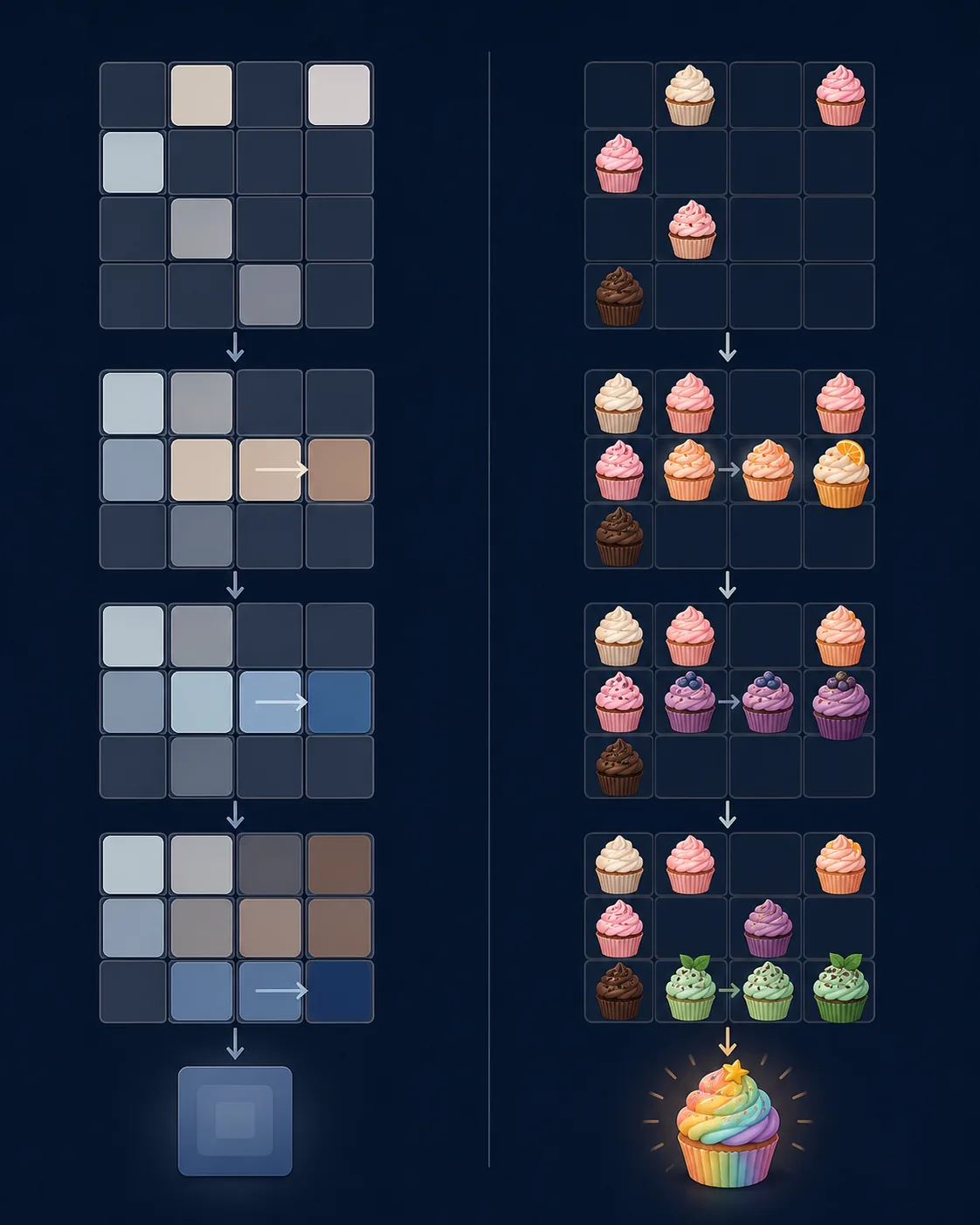
Classic 2048 rules versus cupcake meaning
The easiest way to understand 2048 Cupcakes is to keep mechanics and presentation in separate columns. The classic game supplies the logic; the cupcake build supplies the visual vocabulary that players see while making the same kinds of decisions.
- The board still creates pressure Every move shifts tiles and usually adds a new low-value tile. Empty spaces are a resource, so a pretty tile set does not make the late game automatically easier.
- The value still doubles Two equal tiles merge once per move into the next value. A cupcake image can look different, but its position in the value ladder is the reliable identity.
- The theme changes recognition Players may remember a chocolate, pink, or rainbow tile faster than a plain number. That is a visual learning aid, not a new rule or a promise of a special bonus.
The terms players most often misunderstand
Use this table when a search result, mirror, or screenshot mixes the game name with source, bakery, or download language.
| Term | What it means here | Best way to use the information |
|---|---|---|
| 2048 | The target value and the doubling-based merge system. | Track values and board space; do not judge progress only by frosting color. |
| Cupcake tiles | A visual replacement for plain numbered tiles. | Use the visible value legend or merge order to confirm which stage you have. |
| Rainbow Cupcake | The themed representation commonly used for the 2048 tile. | Treat it as a goal marker, not a real-world product or reward. |
| Image credit | A source statement about the artwork used by a particular build. | Keep image attribution separate from claims about sponsorship or current licensing. |
| Source or mirror | A repository, published page, fork, or rehosted copy of the game. | Check the actual page, controls, and source notes before trusting a search snippet. |
How the meaning connects to the source history
The public source trail is easiest to read as three layers. First comes the original 2048 puzzle concept and its code lineage. Second comes a themed build that places cupcake imagery into the numbered tile slots. Third comes the individual browser copy or mirror a player opens today. A mirror can preserve the same idea while changing its host, frame, controls, or artwork.
This layered view is more accurate than saying that one bakery created every part of the game. The name tells you what the player sees and which puzzle family the rules belong to; it does not settle every question about ownership of photographs, forks, or later copies.
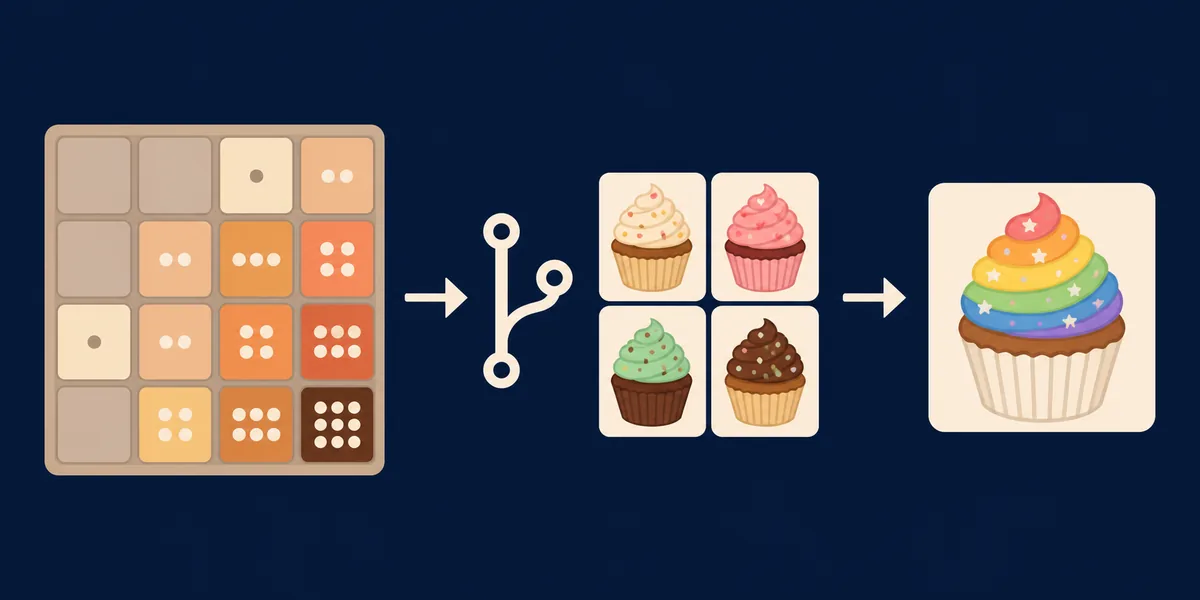
What 2048 Cupcakes does not mean
A clear explanation should also set boundaries. These points prevent the most common search-result misunderstandings.
- It does not mean that the game is a bakery ordering page or a recipe collection.
- It does not mean that every cupcake name in an old tile set is still on a bakery's current menu.
- It does not mean that a public 2048 code repository automatically grants reuse rights for every dessert photograph.
- It does not mean that a page is official simply because it uses the words Cupcakes 2048 or 2048 Cupcakes.
- It does not mean that a colorful tile gives a score bonus. The board rules still depend on legal merges, space, and move planning.
How to check a page when the name is ambiguous
When several results use similar wording, a short source check is more useful than guessing from a domain name or a thumbnail.
- Look for the playable board A game page should explain or show how the board works. If it only offers a download button, treat it as a different intent and inspect the source carefully.
- Read the tile legend The legend or value order shows whether the page really uses a 2048-style doubling ladder and which cupcake represents 2048.
- Separate source from host A GitHub Pages demo, GitLab repository, school mirror, and generic game portal can point to related code without being the same project.
- Treat claims conservatively Prefer direct credits and repository notes. Do not repeat claims of official partnership, safe downloads, or current product availability without first-party evidence.
Sources checked for this explanation
These public first-party or source-level pages support the distinction between the original puzzle mechanics, the themed build, and the bakery image credit. They are references, not download CTAs.
- Original 2048 repository — The open-source project that documents the classic puzzle lineage and merge-game code context.
- 2048 Cupcakes source repository — A source-level reference for the cupcake-themed build and its relationship to the original 2048 project.
- Classic 2048 Cupcakes browser build — A public playable build where the tile theme and value progression can be inspected directly.
- Georgetown Cupcake official profile — A first-party bakery reference used only when discussing the separate image-attribution question.